๐Ÿ“ž (786) 686-7387

Storm-Damaged Roof in Tampa? What to Do First

The 48 hours after a storm decide both how much damage your house takes and how clean your insurance claim goes. Here's the order of operations โ€” safety, photos, dry-in, then paperwork โ€” from people who work Tampa storms every season.

๐Ÿ“ž Call (786) 686-7387

The first 48 hours after the storm

  1. Safety first, always. Stay off the roof. Treat any downed line as live. If a tree is on the house or the ceiling is sagging, get out of that room until it's checked.
  2. Photograph everything before touching anything. Wide shots of each roof slope from the ground, close-ups of damage, fallen shingles and debris where they landed, and every interior stain, drip, and damaged item. Timestamps on phone photos are automatic โ€” that's evidence.
  3. Stop the water. Your policy expects you to prevent further damage: buckets inside, and a proper emergency tarp/dry-in outside as soon as it's safe. Keep the tarping invoice โ€” it's usually a claimable mitigation cost. If water is entering now, this page applies too: emergency roof repair.
  4. Keep the evidence. Don't throw away torn shingles, damaged flashing, or the limb that hit the roof until the adjuster has seen them or told you to. Bag small pieces; photograph big ones in place.
  5. Open the claim, then get the roof inspected. File with your carrier, get a claim number, and have a licensed roofer document the roof itself โ€” before the adjuster's visit if scheduling allows.
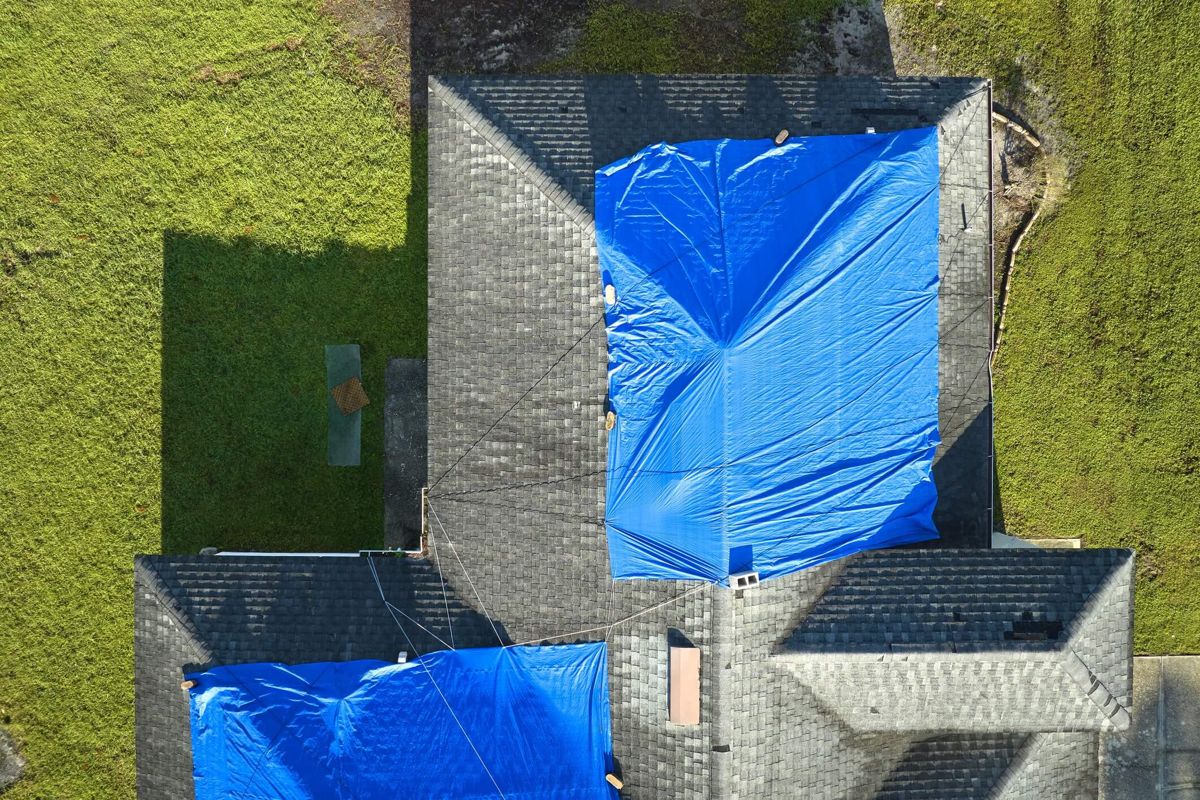
Blue tarp dry-in covering storm damage on a shingle roof, seen from above

Documenting damage the way adjusters need

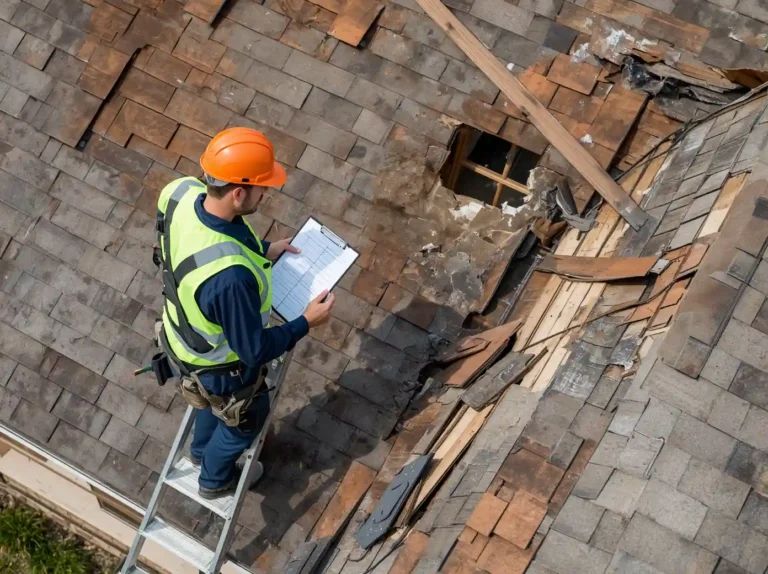
Adjusters approve what they can verify. The documentation that works: dated overview photos of every slope, close-ups with a coin or tape measure for scale on creased and lifted shingles, photos of the attic side showing water intrusion paths, interior damage photos, and a written list matching each photo to a location ("NW slope, above garage"). A licensed roofer's inspection report with the same photo set gives the adjuster a professional record to work from โ€” and gives you one if the first answer is no.
How the claim path actually works in Florida

Plain language, no legal advice, no outcome promises โ€” because nobody honest can promise you one. The typical sequence:

  1. You file the claim with your carrier and get a claim number. Mind the deadline: Florida law requires notice of an initial claim within one year of the date of loss for most property policies (with a longer window for supplemental claims) โ€” don't let a busy season eat your deadline, and check your own policy for its exact terms.
  2. The carrier assigns an adjuster, who schedules a visit โ€” days after a quiet storm, potentially weeks after a major hurricane when half of Tampa Bay is filing at once.
  3. The adjuster inspects. You're allowed โ€” and well advised โ€” to have your licensed roofer present at this inspection, walking the roof with the adjuster and pointing to the documented damage. Two sets of professional eyes miss less than one.
  4. The carrier decides: repair scope, replacement, or denial. If the scope misses real damage, the roofer can submit a supplement โ€” additional documented items for the carrier to review. Supplements are normal in Florida roofing, not confrontations.
  5. Work proceeds under permit with Hillsborough County inspections, and payment flows per your policy terms (typically actual-cash-value first, recoverable depreciation after completion).

What's a deductible reality check? Florida hurricane deductibles are usually a percentage of dwelling coverage (2% is common), not a flat dollar amount. On a $400,000 policy that's $8,000 โ€” which is why "the insurance will just pay for a new roof" is often wrong, and why an honest scope conversation comes before any contract.

โš  Read before you sign: assignment of benefits (AOB) and contractor paperwork.

After every Tampa storm, door-knockers push paperwork. Some of it is a legitimate work authorization. Some of it is an assignment of benefits โ€” a document that signs your insurance claim rights over to the contractor, letting them negotiate, bill, and even sue your insurer in your name while you lose control of your own claim. Florida's 2022โ€“2023 reforms banned AOBs for new property policies, but related pressure tactics persist: direction-to-pay forms, inflated "sign now, today's the last day" pitches, and promises that signing is required to "start the claim." It isn't. Rules that protect you: never sign anything you haven't read in full, never sign under time pressure at your door, and know that a reputable roofer will inspect, photograph, and quote before asking for any signature beyond a work order you understand. If a document mentions "assign," "transfer of benefits," or "irrevocable," stop and read it twice โ€” or don't sign it at all.

Inspector on a ladder examining a damaged shingle roof during a damage inspection

Repair now vs. wait for the claim

Both, in the right order. Emergency dry-in happens first โ€” tarping and temporary sealing are damage mitigation, they protect the house, and they generally don't prejudice your claim as long as the damage was photographed before the tarp went on. Permanent repairs wait for scope โ€” doing the full repair before the adjuster documents the damage can leave you arguing over a roof that no longer shows what the storm did. The exception: if a "temporary" situation is actively destroying the interior, document heavily and do what's needed to protect the home; safety and mitigation outrank paperwork every time.

And if the storm found an old roof's weak spots rather than damaging a healthy one? That distinction โ€” storm damage vs. wear โ€” is the most common claim fight in Florida. An honest roofer tells you which one you have before anyone files anything. Filing a wear-and-tear roof as storm damage wastes everyone's time and can hurt you with your carrier.

Book a storm damage inspection

Call (786) 686-7387 (answered 24/7) or send the form. A licensed roofing contractor in our network will inspect, photograph, and document your roof โ€” the record you and your adjuster both need.

Documentation and inspection help only โ€” we do not file claims, act as public adjusters, or guarantee any insurance outcome.

Storm damage questions

Should I tarp the roof before the adjuster sees it?

Yes โ€” after photographing the damage thoroughly. Florida policies generally require you to mitigate further loss, and a tarp protects both the house and your position. Photograph first, keep the tarping invoice, and leave the damaged material on site for the adjuster to inspect.

How long do I have to file a roof claim in Florida?

For most Florida property policies, state law requires notice of an initial claim within one year of the date of loss, with up to 18 months for a supplemental claim. Your own policy controls the exact terms โ€” check it, and don't sit on storm damage hoping it improves. It won't, and the deadline is real.

Can you guarantee my claim gets approved?

No โ€” and run from anyone who does. Approval depends on your policy, your deductible, and whether the damage is genuinely storm-caused. What a licensed roofer can do is document the roof thoroughly and professionally so a legitimate claim is hard to under-scope. That's the help that actually exists.

A contractor knocked on my door offering a "free roof" if I sign today. What is that?

A sales tactic built on your insurance claim โ€” and the paperwork often includes an assignment of benefits or direction-to-pay that hands control of your claim to that contractor. Florida banned AOBs on newer policies for a reason. Never sign storm paperwork under doorstep pressure; get an inspection and a written quote first, from a contractor you chose.

The adjuster said it's wear and tear, not storm damage. Now what?

Ask for the determination in writing with the photos it relies on. If your roofer documented storm-specific damage (creased/lifted shingles in a pattern, debris impact, fresh deck exposure), that documentation supports a re-inspection request or supplement. Sometimes the adjuster is right โ€” roofs do wear out. The value of your own photo record is that the argument happens over evidence, not memory.

Please read โ€” how this service works: We Fix Any Roof is a referral service, not a roofing contractor. We connect Hillsborough County homeowners with licensed, insured local roofing contractors. Roofing work is performed and warranted by the licensed contractor we connect you with.

Storm damage? Document first, then call.

Damage inspection intake for Tampa, answered 24/7.

๐Ÿ“ž Call (786) 686-7387
๐Ÿ“ž Storm Damage? Call (786) 686-7387